In a survey conducted among a small sample size of participants, results show that teenagers are more uncomfortable with sharing locations with their family members compared to their friends.
are mildly to very uncomfortable with sharing locations with friends.
Respondants
are mildly to very uncomfortable with sharing locations with family.
Before conducting the survey, I predicted that Teenagers valued autonomy and transparency, drawing these values from personal experiences using Life360. In the period that I used Life360 I felt that my privacy was being invaded, as I would receive messages asking why I haven't returned to my apartment or what I was doing outside late at night. It was instances like these that led me to believe Teenagers who were made to download Life360 felt the similarly.
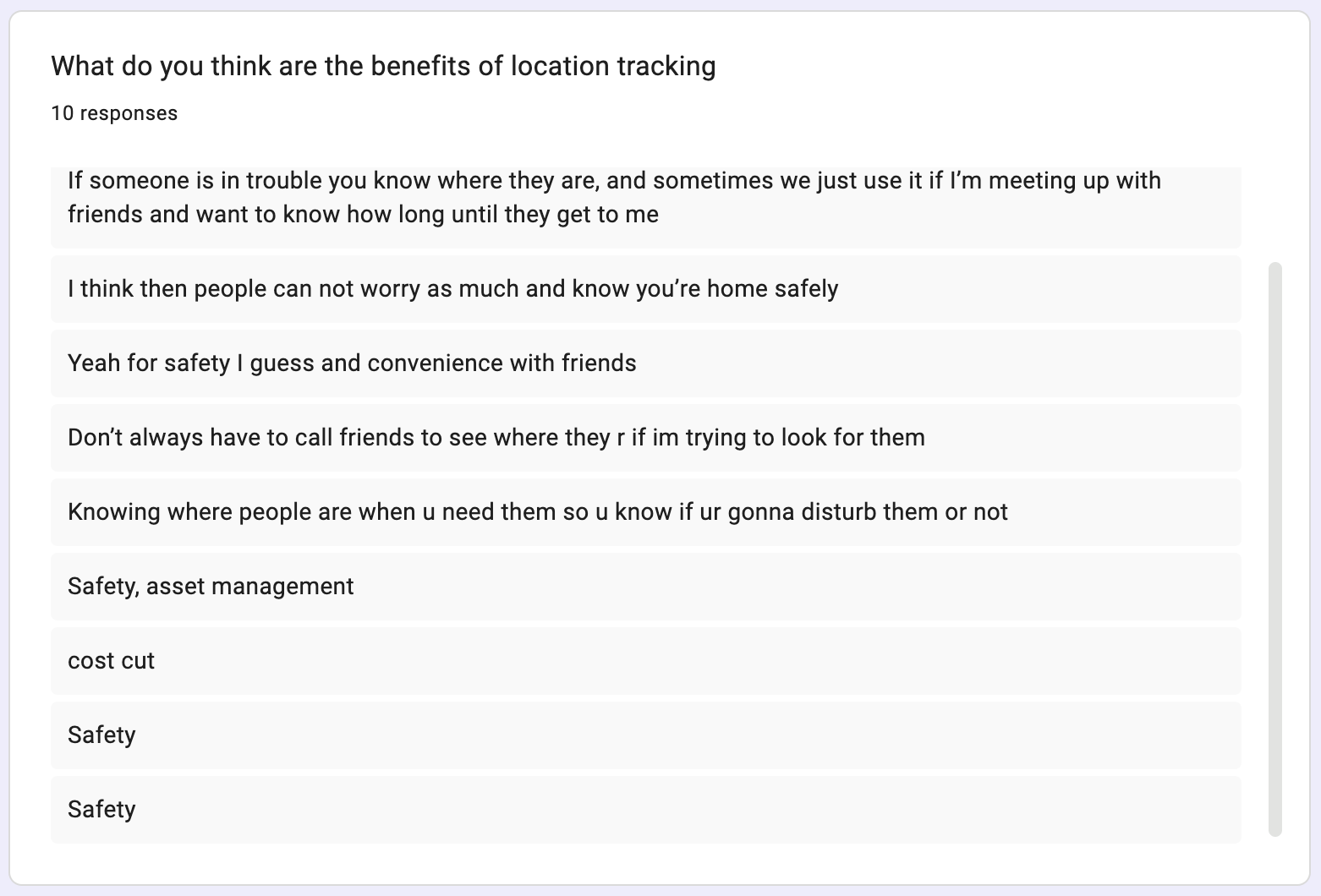
The results from my survey matched my predictions, and I was also
able to identify two other values from the results. Location tracking
provided convenience, especially when trying to make sudden plans
with friends. They also felt that it added a layer of safety, being able to
check up on friends and family.
If there is danger, someone knows where you are. Reduce worry among loved ones.
Teenagers value having power to govern themselves without outside interferance.
If location tracking is a must, how and when they are being tracked by others is important.
When looking to spend time with friends, location tracking aids with creating plans or checking for busyness.
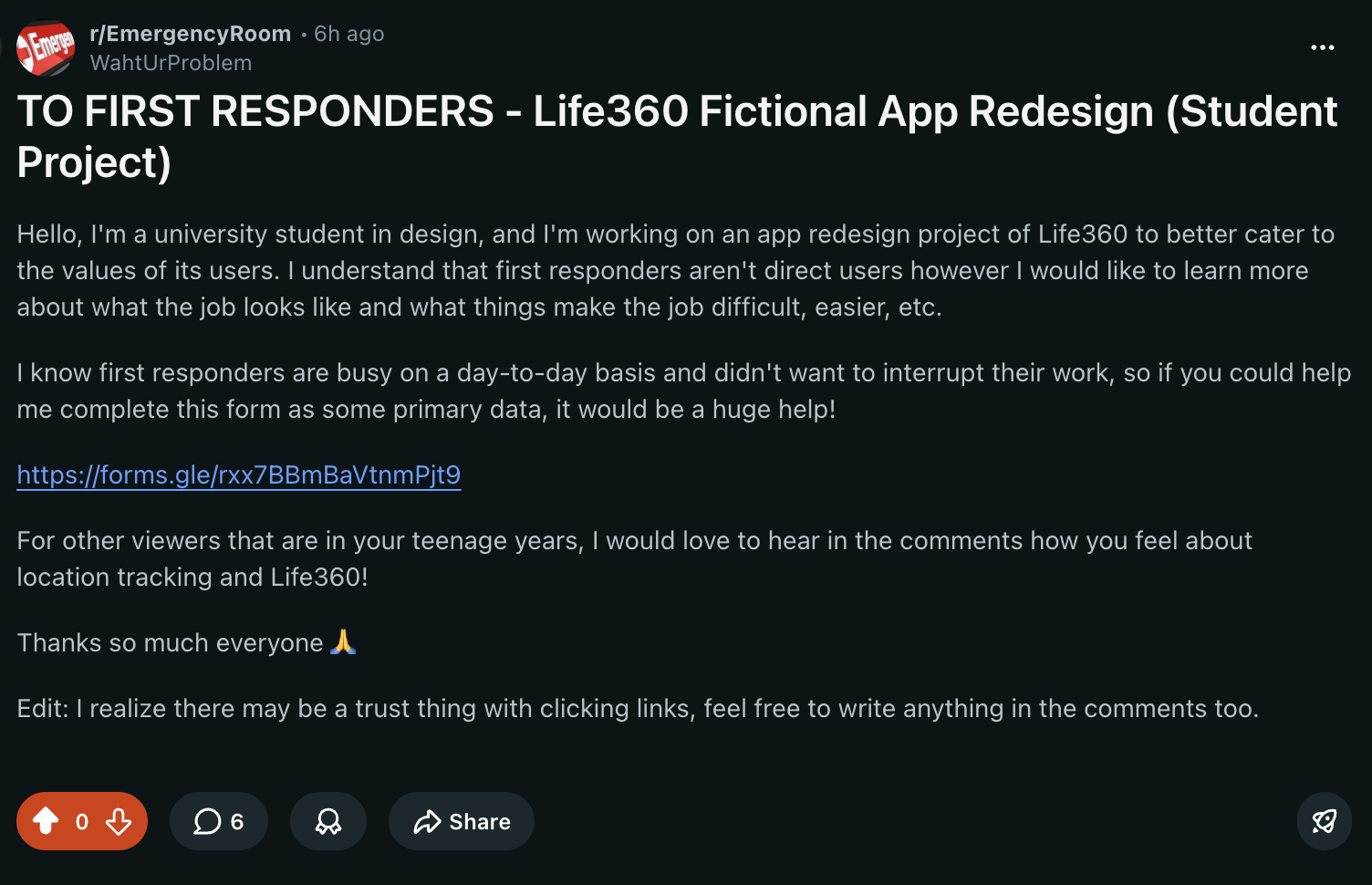
Although First Responders are not direct users of the app, Life360 contains an SOS feature where users can have access to 24/7 dispatch in emergency situations. In order to understand how their work is affected by how users interactions with Life360, I attempted to survey first responders over the internet.
I reached out via a Reddit platform, and I was able to successfully receive one quality response, however due to the post receiving overwhelming
negativity from users, I took down the post and switched to gathering quotes from news articles.
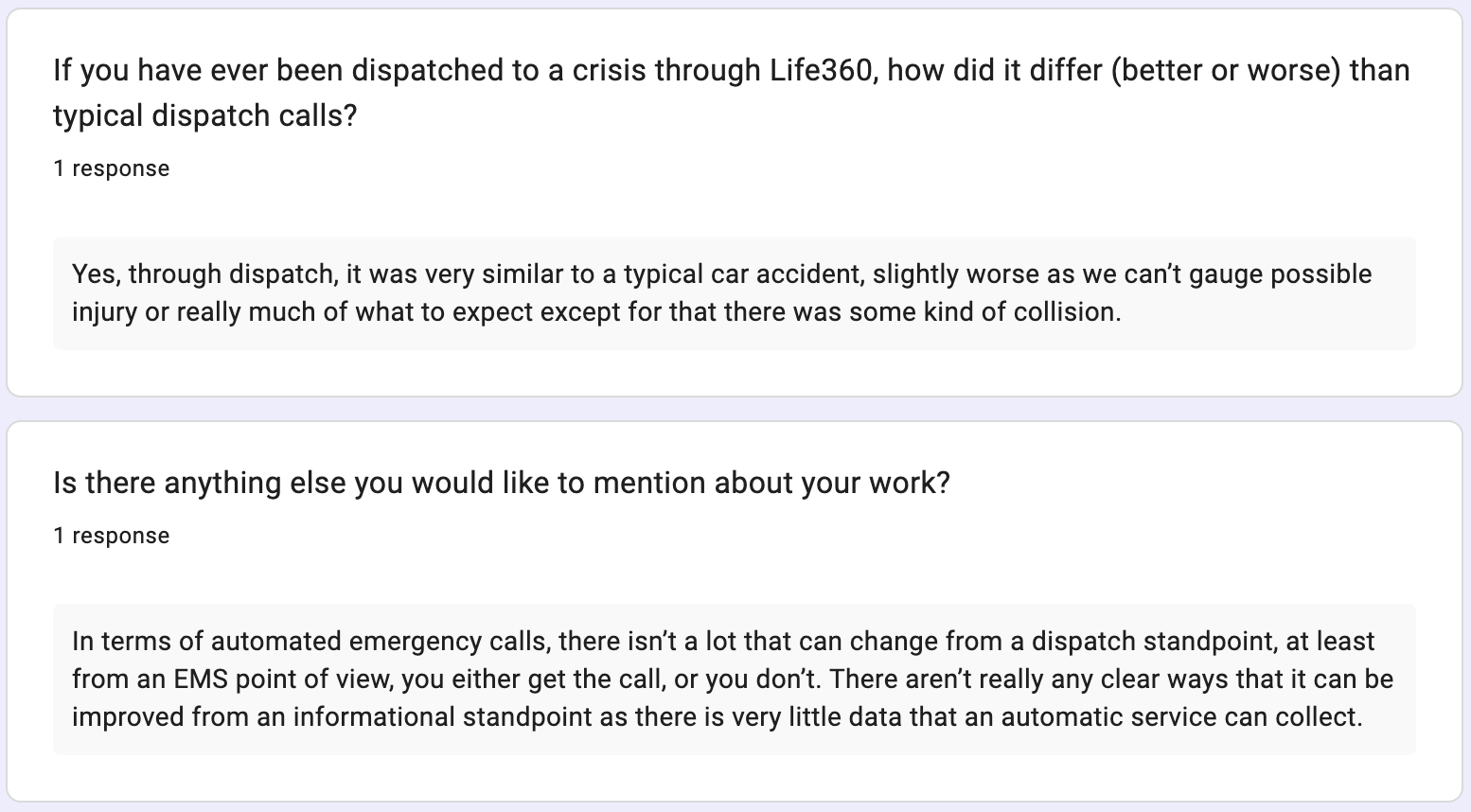
Something that surfaced through the single response received was that Life360 fails to support first responder's jobs.
A lack of information creates difficulty in knowing what to expect when arriving at the scene.
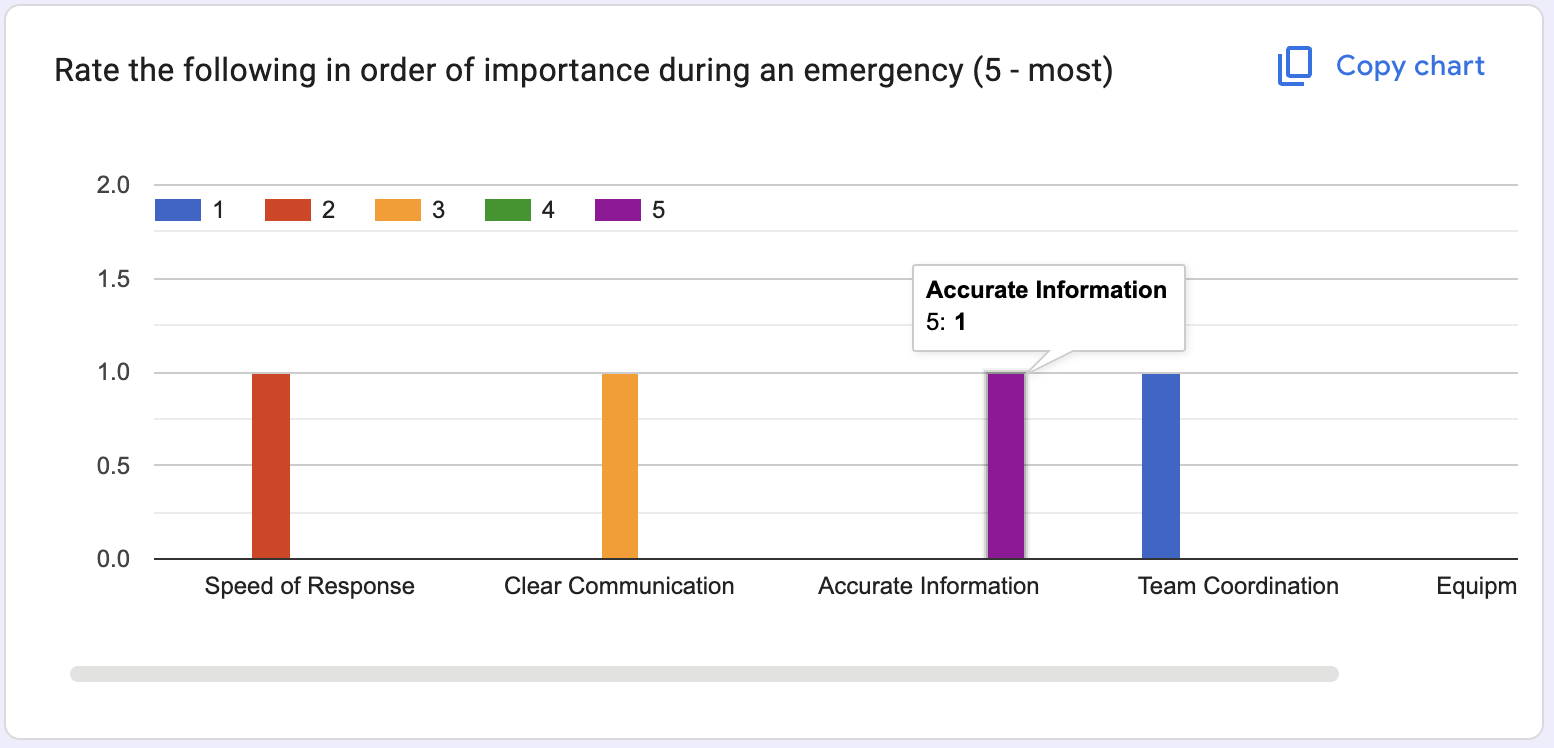
The first responder that responded to the survey noted that accurate information is one of the most important things amidst and emergency.
Through the responders experience of being dispatched through Life360, they added that information not only contributes to readiness and prepared-ness when arriving at a scene, it also improves efficiency
and ability to do their job well.
Prioritization of safety and saving others.
Preventing and minimizing harm within society.
A duty to perform their job in the best and fastest way possible.
Supports efficiency when attending to emergency situations.
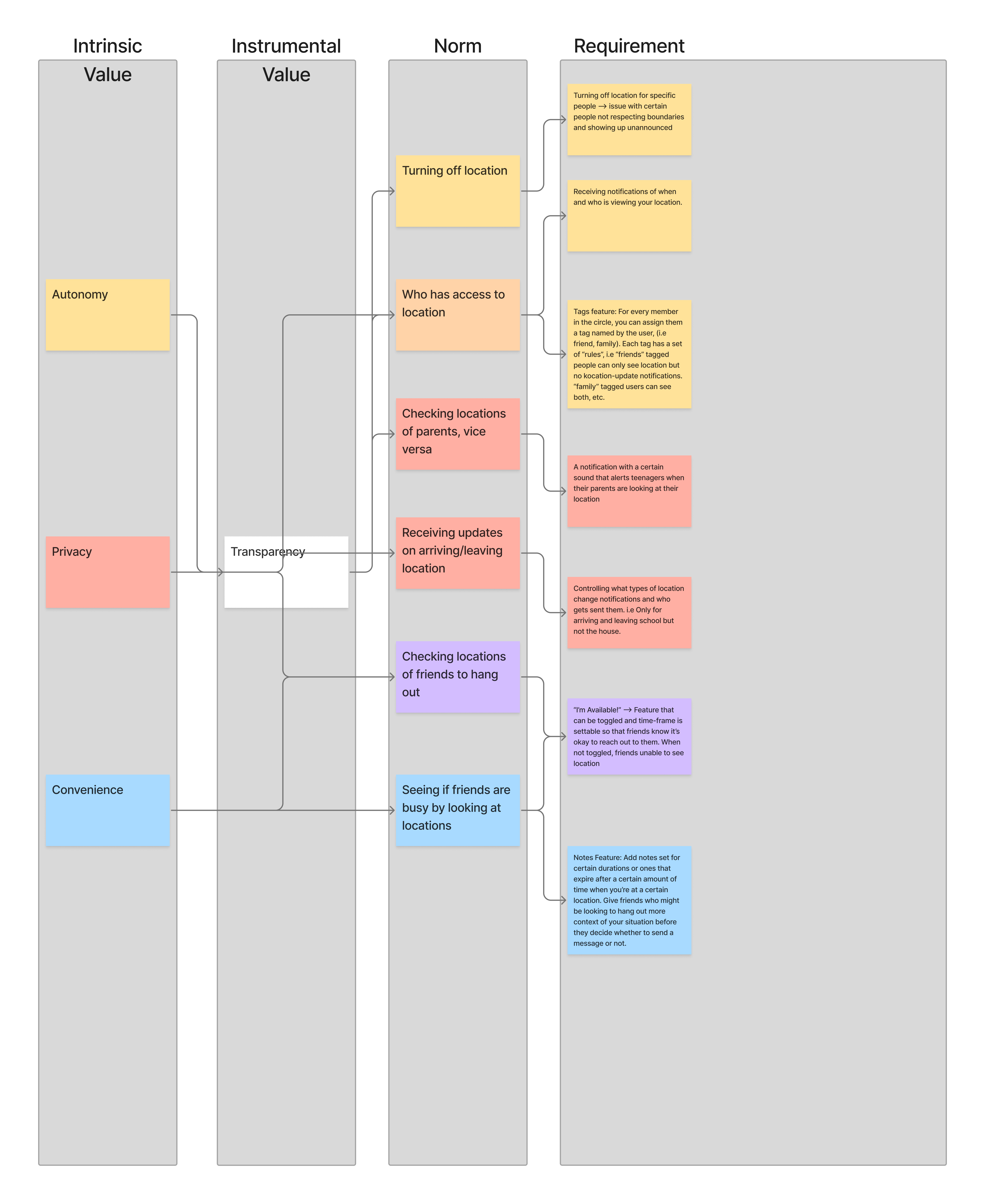
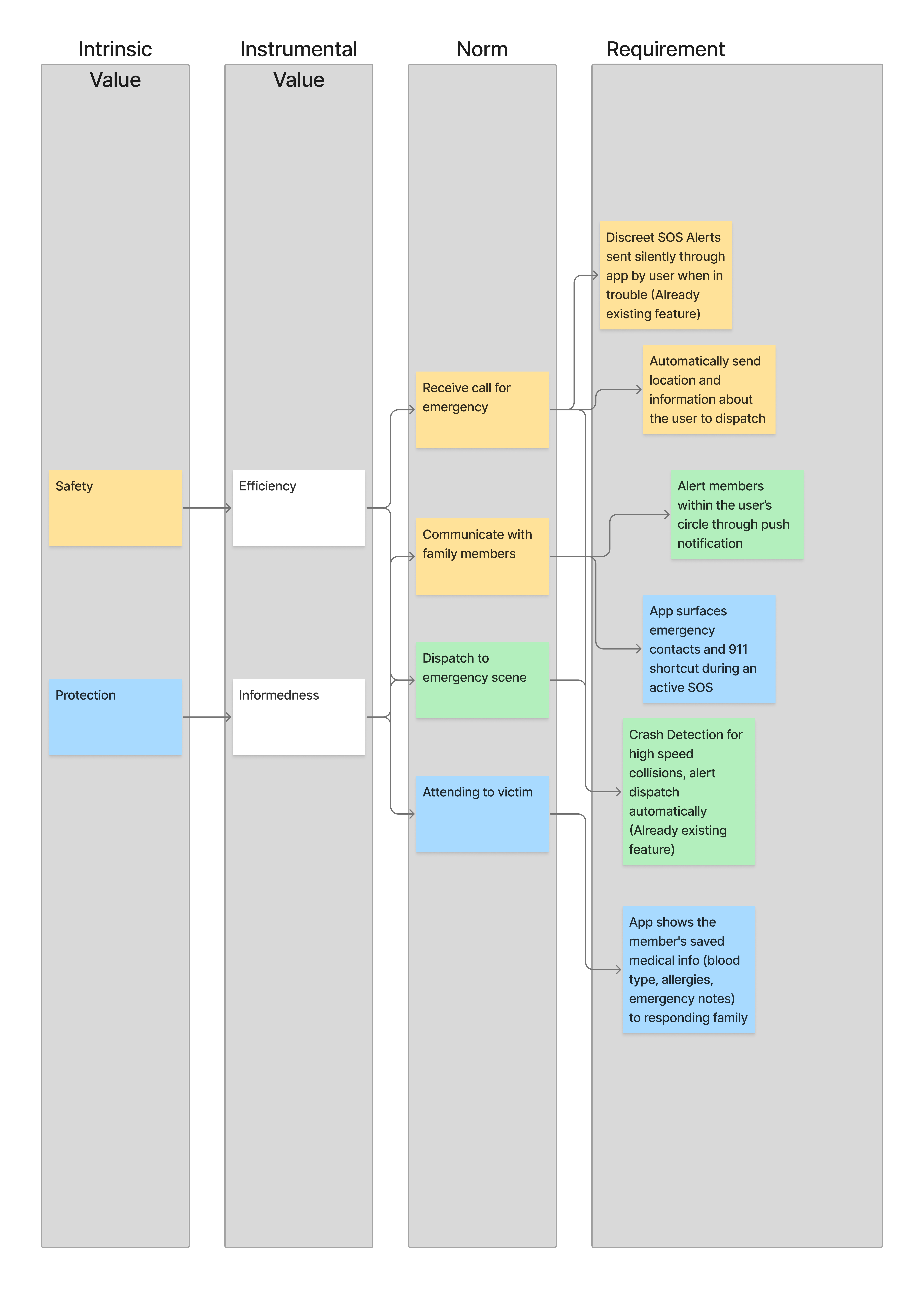
Using the elicited values, I created a value-hierarchy chart to guide design features the redesign must include in order to satisfy the needs of the chosen direct and indirect stakeholder.
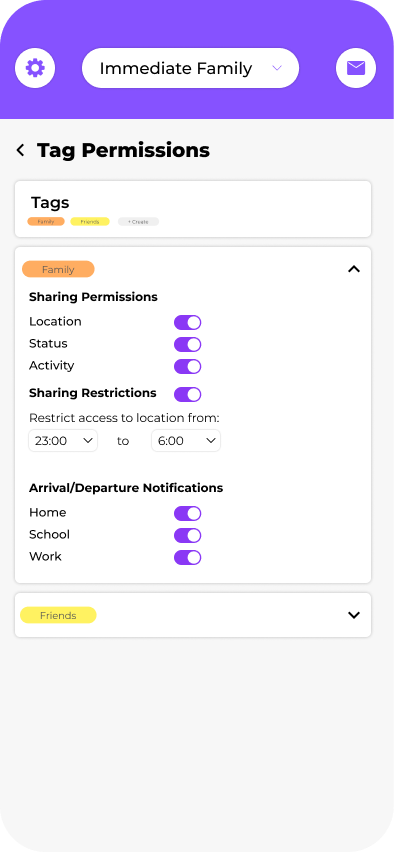
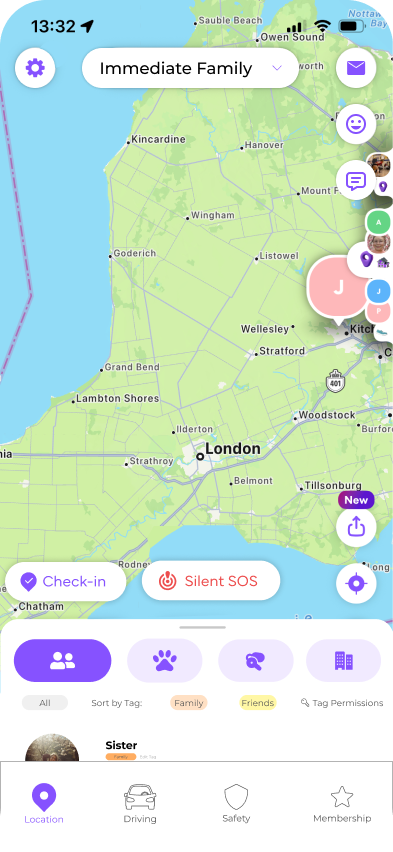
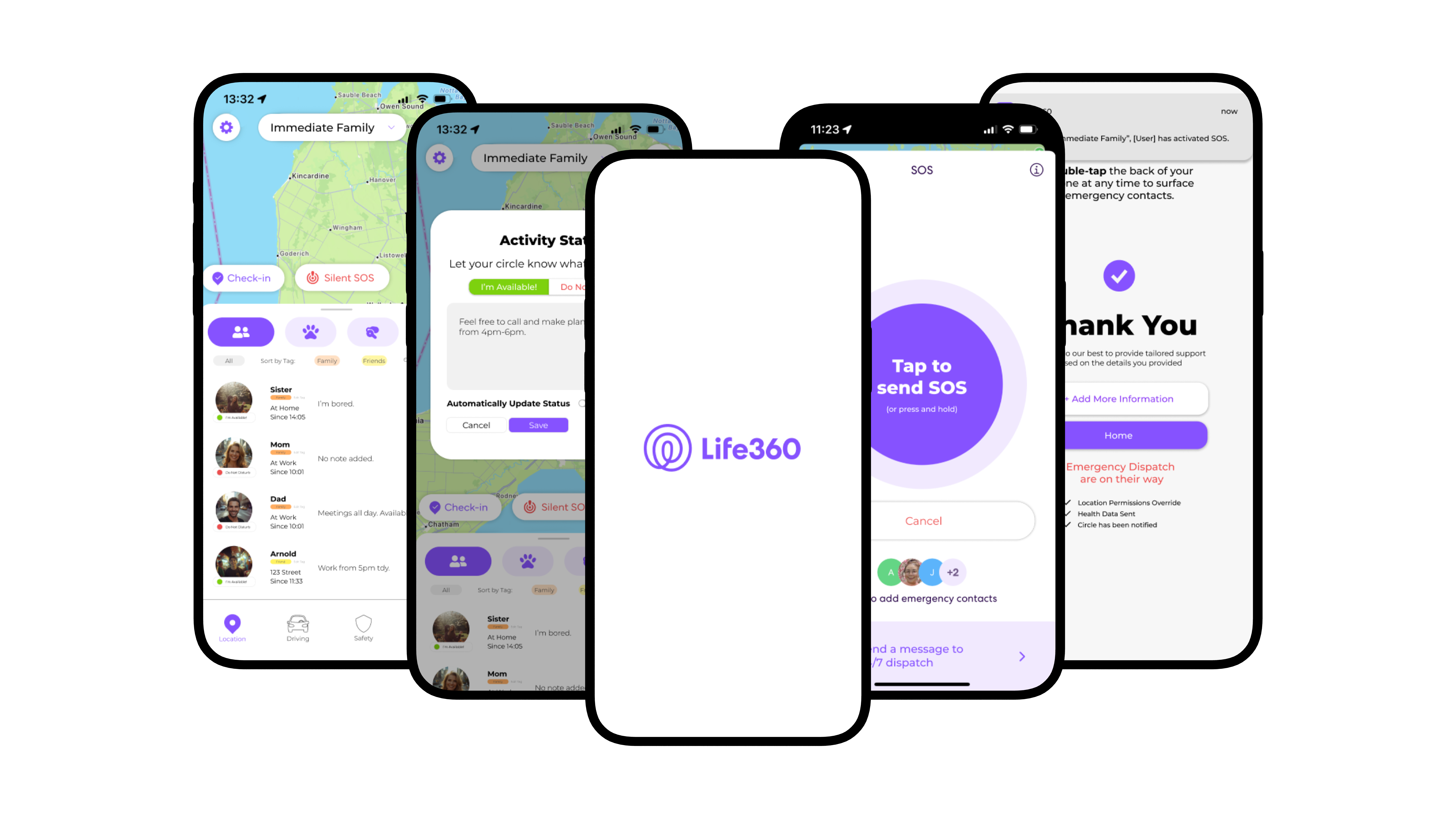
A feature where the user can attach 'tags' to each member of the circle and customize sharing permissions. This caters to the value of privacy while still maintaining the location tracking element of Life360.
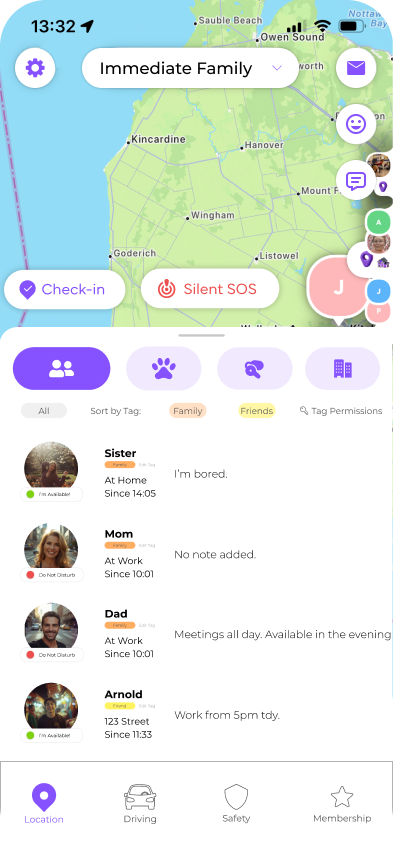
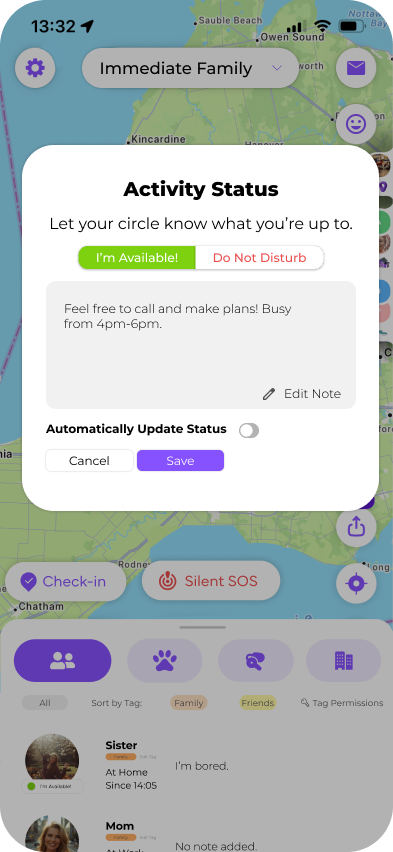
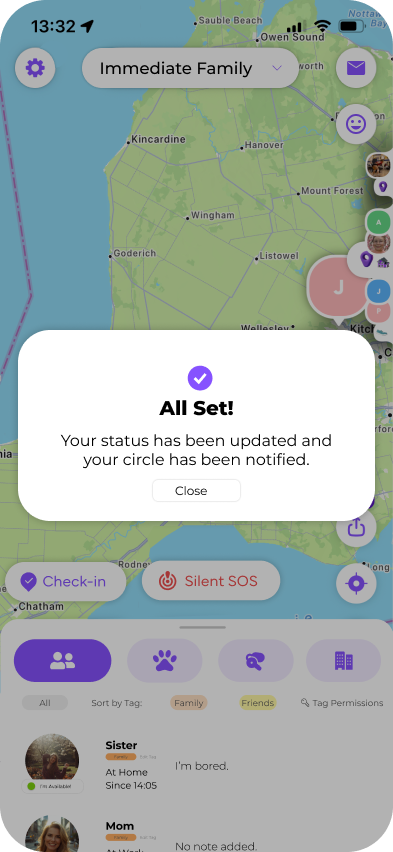
One of the primary ways teenagers use location tracking is to see whether friends are available before sending a message or call. They say "it's convenient to check their location first before going through the trouble of contacting them first". With the I'm Available feature, users are able to add notes and share a status: Available or Do Not Disturb. While on either status, users are able to choose a time period to switch their status automatically. This way, users can maintain their privacy but still have the convenience of reaching their friends when needed.
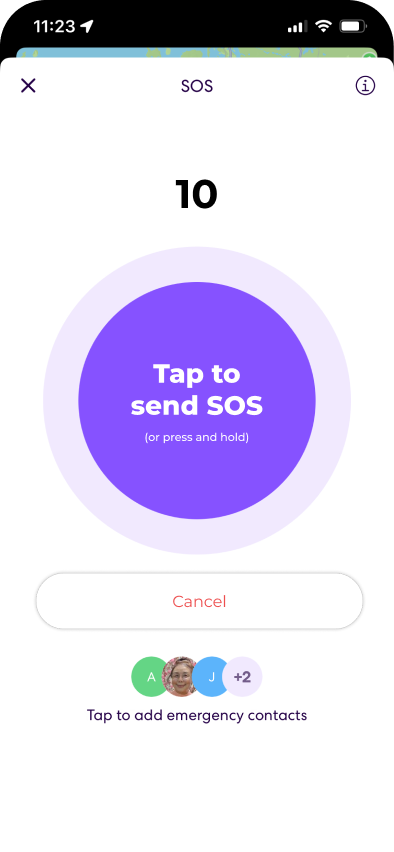
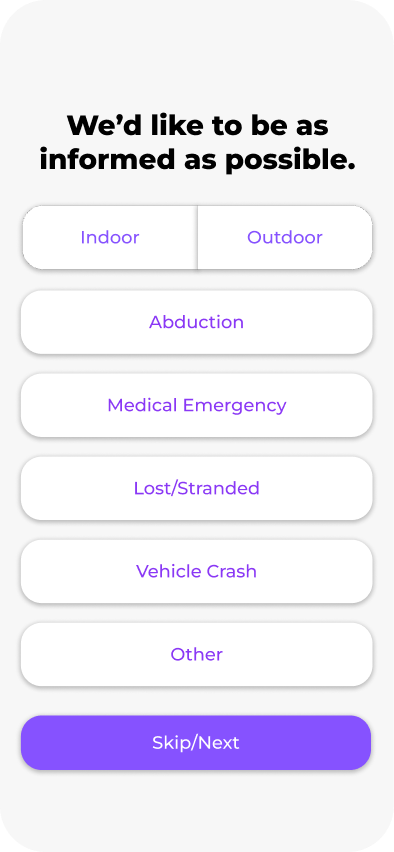
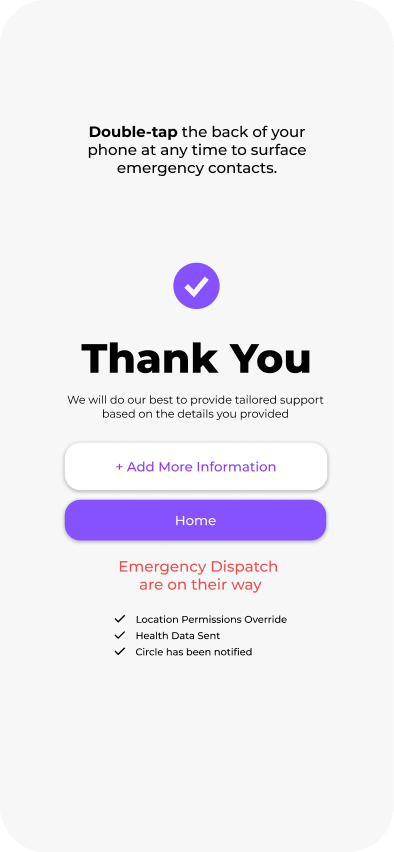
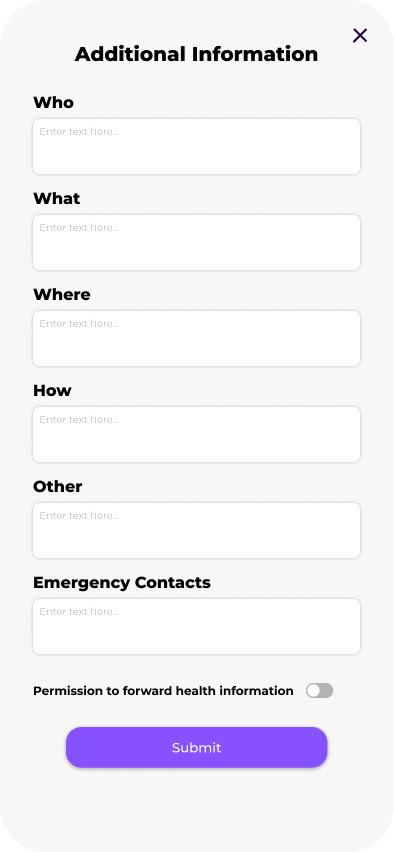
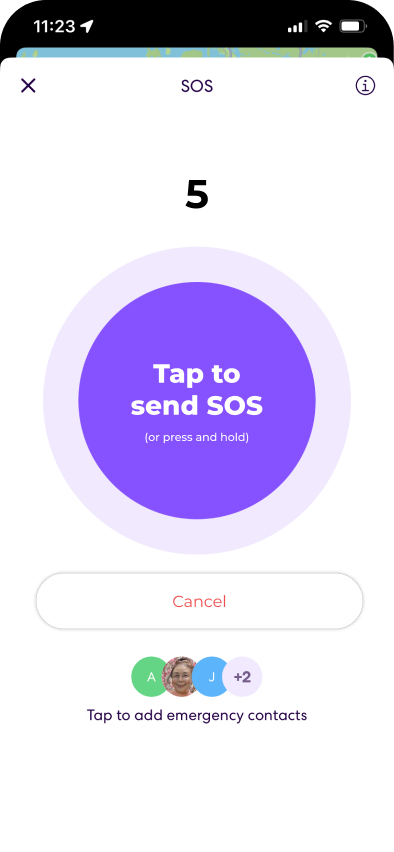
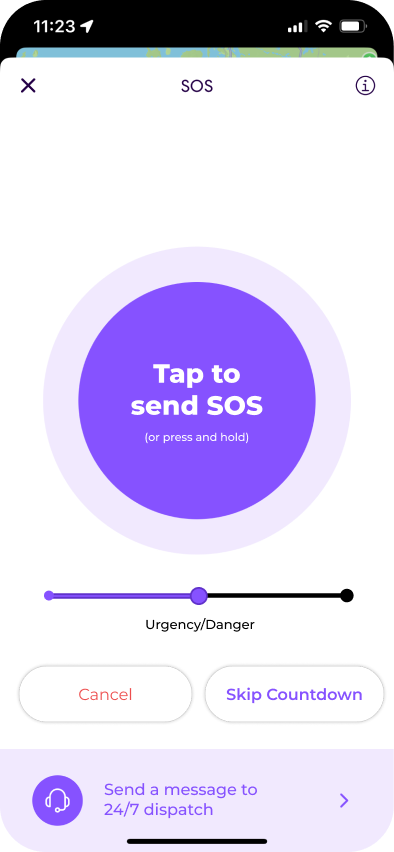
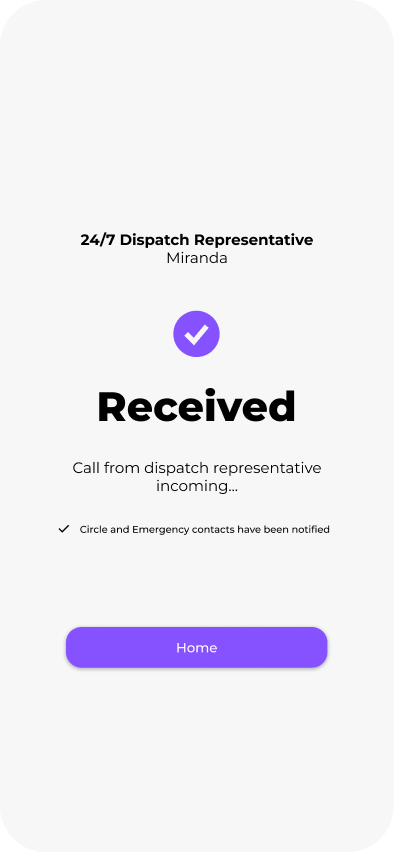
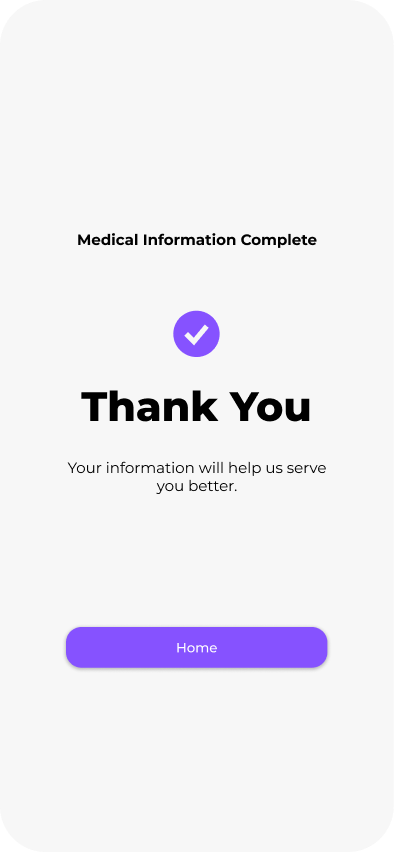
First responders value informedness but Life360 fails to provide adequate information in times where dispatch stems from an in-app call to action. In the Silent SOS feature, after a 10 second confirmation that this action was intnetional, to aid first responders in their work, I added a quick screen before confirming the transmission was sent, encouraging users to give some context about the situation at hand just by tapping one of the available options. I felt this was the best approach due to SOS situations typically being time-limited. However, if the user does have more time, there is an option on the completion screen where they can add more information.
An upgraded SOS feature that helps first responders gage the urgency of an SOS situtation. Peers noted that the degree of urgency can vary, therefore an urgency slider in addition to quick prompts help with overall informedness. There was also many comments about whether 10 seconds was too long of a wait time before proceeding. This is where a 'skip' feature was implemented to let users move ahead in the submission faster.
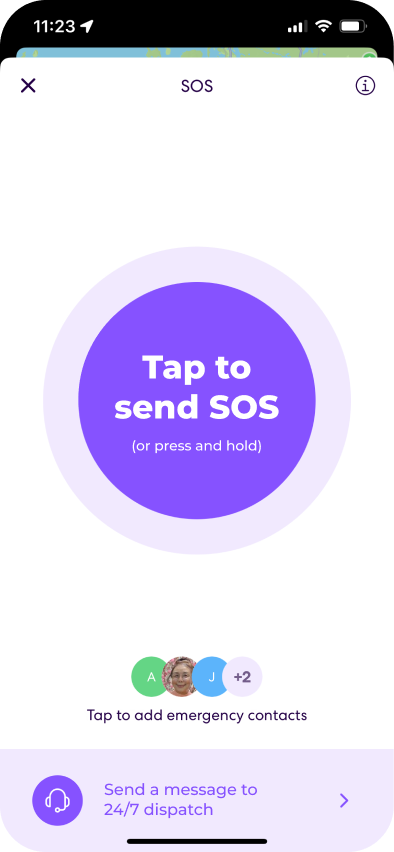
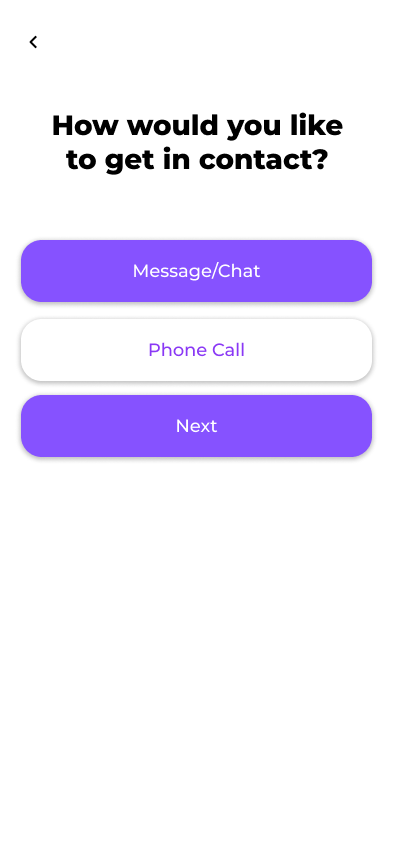
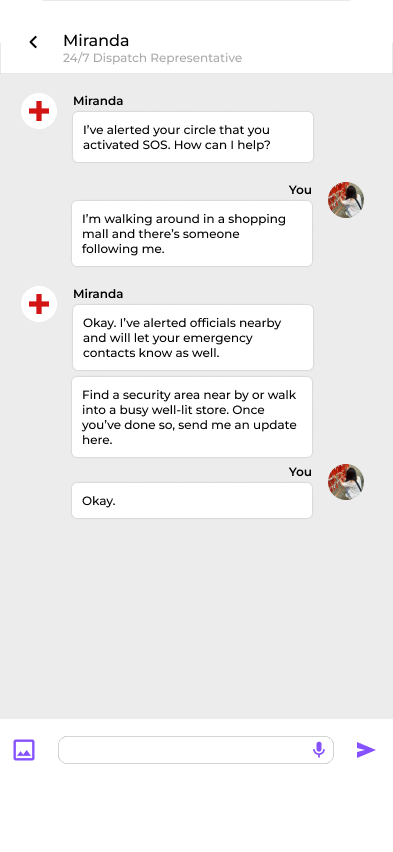
Feedback included having a way for the user get in contact with their dispatch representative directly, so I added on a message feature, accessible from the SOS page.
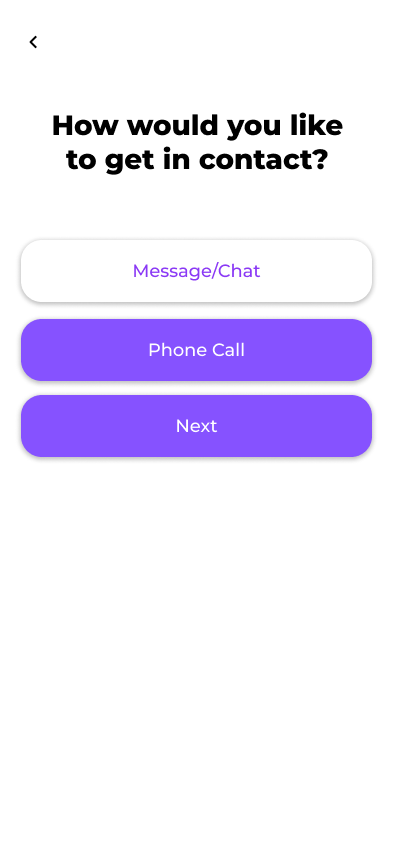
A call option in addition to the message function was an iteration inspired by peer feedback. It was raised that an SOS emergency is not always silent. Users nay opt to contact their Life360 24/7 dispatch representative or call 911 through reguar means.
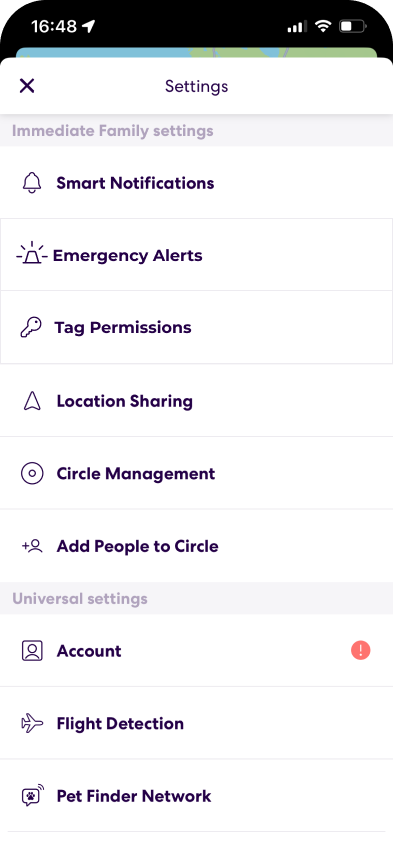
It was noted that the place the user edits the tag permissions were unclear and felt hidden, so I modified the flow so that users are also able to access the permissions page through settings.
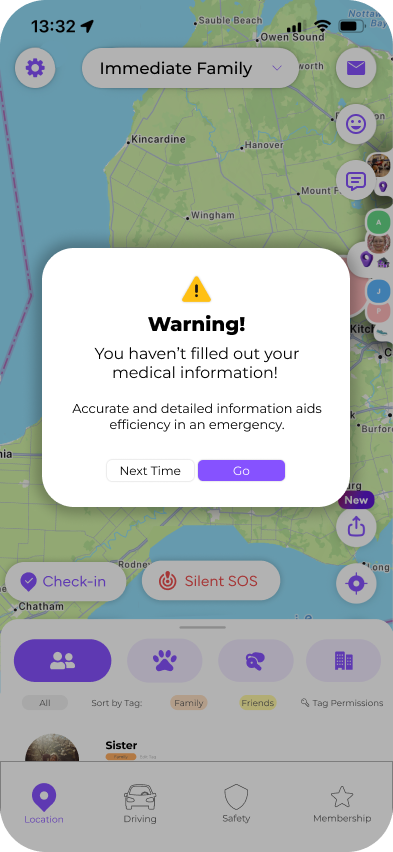
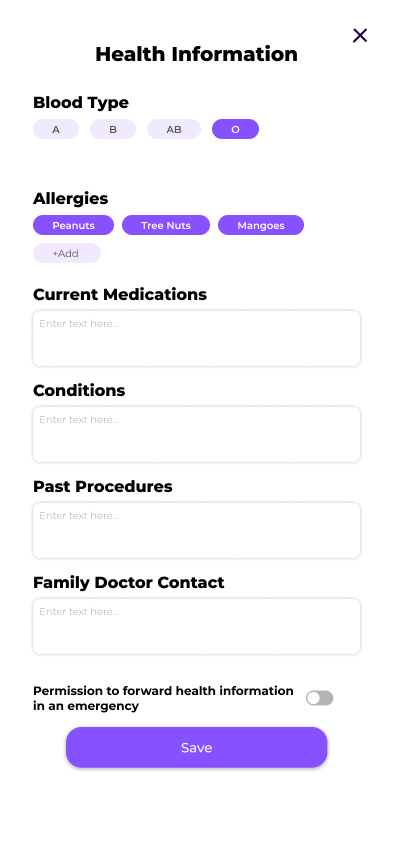
"I know about the situation but nothing about the person". This is what inspired the iteration of encouraging users to update their medical information, if they haven't done so yet, every time they open the app. This caters to first responder's need for informedness, helping them more-efficiently handle SOS situations.
From a research standpoint, more time and ability to conduct interviews with local responders in the early stages would have benefitted the direction
of the redesign. Through a failed attempt at posting an online survey, and inability to receive a response from local authorities, I was only able
to infer values rather than hear real experiences of dispatch resulting from Life360. This made it challenging to design for first responders, especially
as they do not directly interact with the app. If I had to do this project again, I would spend more time on primary research, to ensure I am truly designing
for the benefit of the stakeholder.
As a personal user of Life360, I did not think it was possible to design a location
tracking app in a way that can prioritize privacy and transparency, when it was fundamentally built to
breach those two values. Designing with a user-centered approach helped me realize that those common
frustrations that we experience not just with Life360 are very fixable and there are workararounds to
value conflicts where both parties can be satisfied with what they prioritize. This was proved through feedback sessions
with stakeholders, and it was evident how small changes can magnify the satisfaction of a user experience just by
making small accomodations. Going forward, value sensitive design is something I forsee myself implementing into future design work to improve
satisfaction and to better existing or upcoming projects.